




Back translation is the process of translating a previously translated text back into its original language. It matters because it helps confirm that the translation preserved the meaning and intent of the text.
You now know the back translation definition. So let’s look at the process in more detail and see how this method works in real localization projects.
Table of Contents
What Is Back Translation?
So, back translation is a method for checking translation quality. First, a translator translates the text into another language, and then another translator translates it back as literally as possible without seeing the original text.
Even a translation that looks good can change the meaning of a phrase or an entire passage. Back translation lets you see how the foreign version “reads” in the original language.
Back Translation Meaning in Practice
In practice, back translation helps you see whether the translated text has changed its meaning.
For example, a phrase may look fine in translation, but the back-translated version may reveal that its meaning has weakened, become harsher, or changed. This happens especially during localization, when a translator adapts the text for another culture.
Examples with different language pairs:
- The English phrase “Fast and Furious” is rendered by a translator into German as “Schnell und wütend”. Back translation into English shows “Quick and angry,” which changes the meaning.
- The French slogan “Le plaisir de conduire” is rendered into Spanish as “El placer de manejar”. Back translation into English yields “The pleasure of handling,” not “The pleasure of driving.”
Back translation helps spot these changes and ensures that the adaptation doesn’t distort the original meaning.
The Back Translation Method: Step by Step
The back translation process is logical and straightforward:
- A translator translates the text from the original language into the required language.
- Another translator performs a reverse translation.
- A specialist compares the result with the original version.
- If needed, they make edits.
This process works well because you don’t need to know a foreign language to evaluate translation quality.
Why Is Back Translation Important: Key Benefits
Back translation helps reveal errors and inaccuracies in a translation. It brings the most value in situations where mistakes can cost a lot.
It helps you:
- Avoid incorrect interpretation of terms.
- Preserve the exact meaning of the message.
- Reduce risks in legal and medical texts.
- Control the quality of complex translations.
- Meet regulatory requirements in highly regulated industries.
In short, back translation adds an extra layer of protection to your content.
When Should You Use Back Translation?
Back translation doesn’t fit every text. However, in some cases, ordering this service makes sense and helps you avoid content risks.
Highly Regulated and High-Risk Content
If you work with medical materials, contracts, or financial documents, back translation becomes a real necessity. In this type of content, even one small inaccuracy can lead to serious consequences, from legal issues to risks to people’s health.
Creative and Brand-Sensitive Content
At first glance, creative content may seem like it doesn’t need back translation. But that’s not always true. Imagine an advertising slogan. It may sound good in another language, but the back translation can suddenly reveal a different tone or a loss of emotion.
Back translation helps ensure that your brand speaks to the audience exactly the way you intended.
Back Translation Best Practices
To get real value from back translation, you need to use it correctly. These best practices help you avoid bias and spot real issues:
- Use a different translator for back translation. One person should not handle both steps.
- Don’t show the original text to the back translator. This helps avoid subconscious corrections.
- Give clear instructions. Explain that the goal is accuracy, not style or improvement.
- Ask for a literal result, but allow natural grammar in the language.
- Compare the back-translated text with the original carefully and focus on meaning, not wording.
- Apply back translation only to critical content to save time and budget.
Following these practices helps you get clear insights and maintain high translation quality without unnecessary costs.
Back Translation vs. Other QA Methods
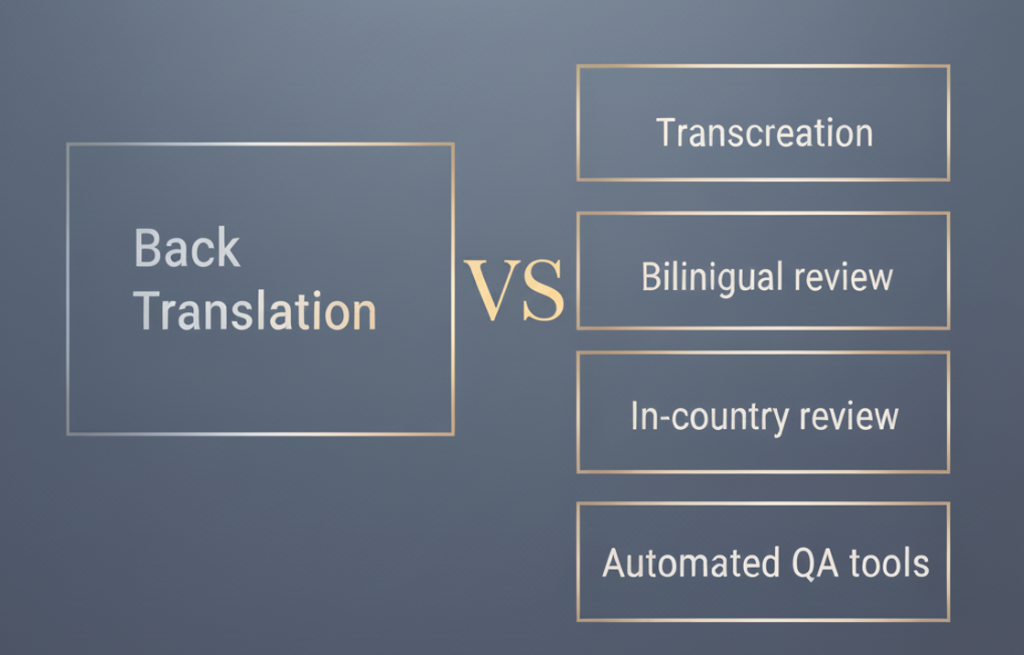
Back translation is only one way to check translation quality. Depending on your goals, other QA methods can work better or support them.
- Transcreation: This method focuses on emotion, tone, and cultural impact. Translators reshape the message so it feels natural and engaging for the local audience. Teams often choose transcreation for marketing, branding, and creative content.
- Bilingual review: A bilingual specialist quickly checks the translation. The reviewer compares the source and target texts and points out obvious mistakes or inconsistencies. This method saves time but can miss subtle changes in meaning.
- In-country review: Local experts review the text from the perspective of real users. They check if the language sounds natural and fits the cultural background. This method improves localization quality and relevance.
- Automated QA tools: These tools scan large amounts of text for consistency, terminology issues, and formatting errors. They work well for big projects and repeated content. They can’t judge meaning, tone, or intent, so teams still rely on human review.
Often, the best results come from combining several methods instead of using just one.
Conclusion
So, what is a back translation? It’s a quality check method that shows if a translated text still matches the original meaning, intent, and key details. It helps reduce risks, avoid costly mistakes, and ensure accuracy, especially in legal, medical, and high-impact content.
To get reliable results, you need a skilled language professional who understands both the subject and the industry. That’s why Rapid Translate offers back translation services by certified translators with domain expertise. Contact us to get started. The platform has a wide range of translation services that government authorities and official institutions accept with confidence.