





Anyone seeking citizenship or visiting America must undergo an application process. You’ll submit many documents during this stage, but you must first translate them into English if they’re in a foreign language. Due to this, English-speaking foreigners often wish to attempt self-translation.
We must consider several factors before concluding whether self-translation is permissible.
The United States Citizenship and Immigration Services (USCIS) has many requirements, and failure to comply results in delay or even denial. So, is translating your own documents acceptable?
Quick Answer Technically, USCIS does not explicitly ban self-translation under 8 CFR § 103.2(b)(3). However, the applicant and any family member with a direct interest in the outcome cannot objectively certify their own immigration documents. Self-translations carry a high risk of RFE and rejection. A professional certified translation service is always the recommended approach.
Table of Contents
USCIS Translation Requirements
USCIS collects documents from applicants as evidence to support their claims and verify their identities. When these documents are in a foreign language, applicants must submit translated English renditions or face rejection from the onset.
However, the final rendition must meet the stipulated standard while procuring translations. So, to ensure proper compliance, USCIS has outlined translation guidelines under federal regulation 8 CFR § 103.2(b)(3). This rule requires every foreign-language document to be accompanied by a complete English translation and a signed certification from the translator.
Firstly, the translator must type all translations, as some handwriting is illegible. Every translation must be a word-for-word rendition without alteration. While at it, the translator must replicate the original document’s formatting.
So, the headings, layout, and font should be the same to enable the immigration official to compare both documents properly. The translation must also have a certification statement to verify the translator’s identity and qualifications.
It should contain the translator’s name, signature, address, credentials, date, and a statement affirming a complete and accurate translation.
Finally, applicants must submit original copies of non-English documents with the certified English language translation.
What Document Translations Does USCIS Require?
The USCIS clearly states that applicants must translate all documents and certificates not in English before submission. Therefore, you need to confirm from the USCIS office what documents you need.
Usually, these include essential documents containing your personally identifiable information. However, the necessary documents differ according to purpose.
For example, those applying for renewal of green card, permanent citizenship, traveling in or out of the U.S. all need different documents.
But generally, you should have some important documents that require translation as a foreigner. These usually include:
- Birth certificates.
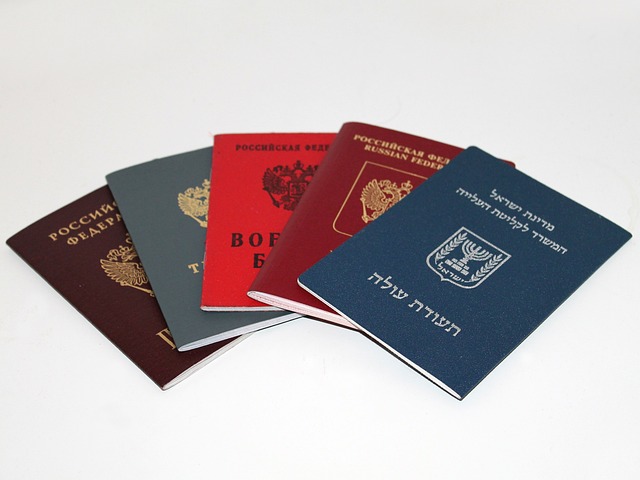
- Travel passports.
- Diploma certificates or academic transcripts.
- Adoption papers.
- Marriage certificates.
- Police records (if any.)
Can I Translate My Own Documents for USCIS Before Certification?
The USCIS has a vital rule regarding submitting any foreign-language document. All non-English documents and certificates from applicants must undergo translation and certification.
Foreign nationals who are well versed in their native language and English may wonder if they can translate USCIS documents. A bilingual person may desire to translate documents before getting an official translator to certify them.
But sadly, and for good reasons, it’s impractical to translate your documents yourself.
Besides, the translator will agree to certify a self-translated document — it would put their reputation on the line. It’s also risky for your family or relatives to translate USCIS documents on your behalf, as they may be partial.
Technically, 8 CFR § 103.2(b)(3) does not explicitly ban self-translation. However, USCIS strongly discourages it – if the translator and the applicant are the same person, it raises credibility concerns and significantly increases the risk of an RFE (Request for Evidence). In practice, most immigration attorneys advise against self-translation for any documents submitted as part of an immigration application. Use a professional service to eliminate this risk entirely.
Advantages and Disadvantages of Translating Your Own Documents
Translating would be a thrill for someone multilingual with a good command of English. It can help you save time and money, but biting more than you can chew would be horrible.
Translating your documents yourself is nice because it costs less and allows you to translate at your own pace. In most instances, people must opt for instant translation or rush notary, which is expensive. But when doing it yourself, you have no one to pay.
Moreover, though translators are professional, there might be some information on your documents that you want to keep private. Processing your translation yourself is an effective way to prevent such details from leaking.
However, agencies hardly accept self-translations as people are prone to impartiality when handling personal cases. Moreover, there is a high tendency to fail at creating a perfect rendition without omission or addition, leading to inaccuracy.
Therefore, acting as a translation provider is unfavorable officially but acceptable for personal use.

Who Can Translate Documents for USCIS?
Since translating your own documents isn’t acceptable, you may wonder who can translate documents for USCIS. A certified professional translator is the approved personnel for handling USCIS documents. As a professional, the translator will be proficient and fluent in the source and target languages.
It’s not enough to be able to speak a language. For example, an English-to-Spanish translator must understand the complex nuances and be conversant with grammar, vocabulary, and language expressions. As such, it will be easy to decipher the meanings of sentences in the proper context.
So, hiring a professional translator is best to avoid complications and lessen the risk of rejection. Your documents will meet the necessary prerequisites with a professional, be it your birth certificate translation. Therefore, you can be sure of a smooth experience while processing your application.
Overview of Hiring a Professional Translator
Hiring a professional translator beats all odds. It allows you to work with specialists in the necessary translation fields. For example, you can hire a legal translator who is well-versed in the immigration process and laws of several countries. Such a translator understands the language, context, grammatical, and cultural nuances.
With such knowledge, translation accuracy is sure. Moreover, professional translators are masters of the game and can tailor translations to meet industry standards.
However, their prices may be expensive as they charge depending on the technicality and length of translation, among other considerations. Also, their turnaround time might not be so rapid.
Since these are choice-specific problems, you can avoid them by adequately researching your translator and checking their track record. So, it’s always better to hire an experienced, qualified translator.
Where To Find a USCIS-Approved Translator
Finding a reliable USCIS translation service means finding a translator who is competent in both languages and experienced with immigration documents.
USCIS does not require ATA certification or any other official credential – however, working with an agency that has a proven USCIS acceptance track record is the safest choice.
Though there are many translators, you must find one who matches the described qualifications. You can surf freelance websites to connect with independent translators to find one.
Alternatively, you can check the ATA directory for certified translators. With this, you can trust that whoever you get is legally certified. In lieu, you can also visit the National Association of Judiciary Interpreters and Translators website for a professional translation service.
Asking for recommendations can also lead you to trusted official translators. But if you’d rather skip the hassle of physical meetings and get a quality translation online, try credible translation companies.
They’re fast, reliable, and understand the USCIS requirements. Rapid Translate is an exemplary agency that handles immigration translations expertly.
With experienced translators in over 80 languages, this agency guarantees a higher percentage of USCIS acceptance.
Rather than asking, “Can I translate my own documents for USCIS?” why not let Rapid Translate handle them professionally?
We’ll translate your documents to the required standard with precision. So, order now and experience the power of seamless translations!
Frequently Asked Questions
Can I translate my own birth certificate for USCIS?
While not explicitly forbidden, self-translating your own birth certificate for USCIS is strongly discouraged. As the applicant, you have a direct interest in the outcome, which creates credibility concerns. A professional third-party translation eliminates this risk entirely.
Can a family member translate USCIS documents?
A family member can technically translate documents, but USCIS may question their impartiality since they have a stake in the application outcome. This raises the risk of an RFE or rejection. A professional service is always safer.
What happens if I submit a self-translated document to USCIS?
USCIS may accept it, but the risk of receiving a Request for Evidence (RFE) is significantly higher. An RFE delays your application by weeks or months and may require resubmission with a professional translation – costing more time and money than hiring a professional from the start.
Does USCIS require an ATA-certified translator?
No. USCIS does not require ATA certification. Any competent bilingual individual can certify a translation – but using a professional service with a USCIS acceptance guarantee is the safest option.
How much does a USCIS translation cost?
Professional certified translations typically cost $25–$40 per page in 2026. Rapid Translate charges a flat $27.99 per page with a 100% USCIS acceptance guarantee and 24-hour delivery.